
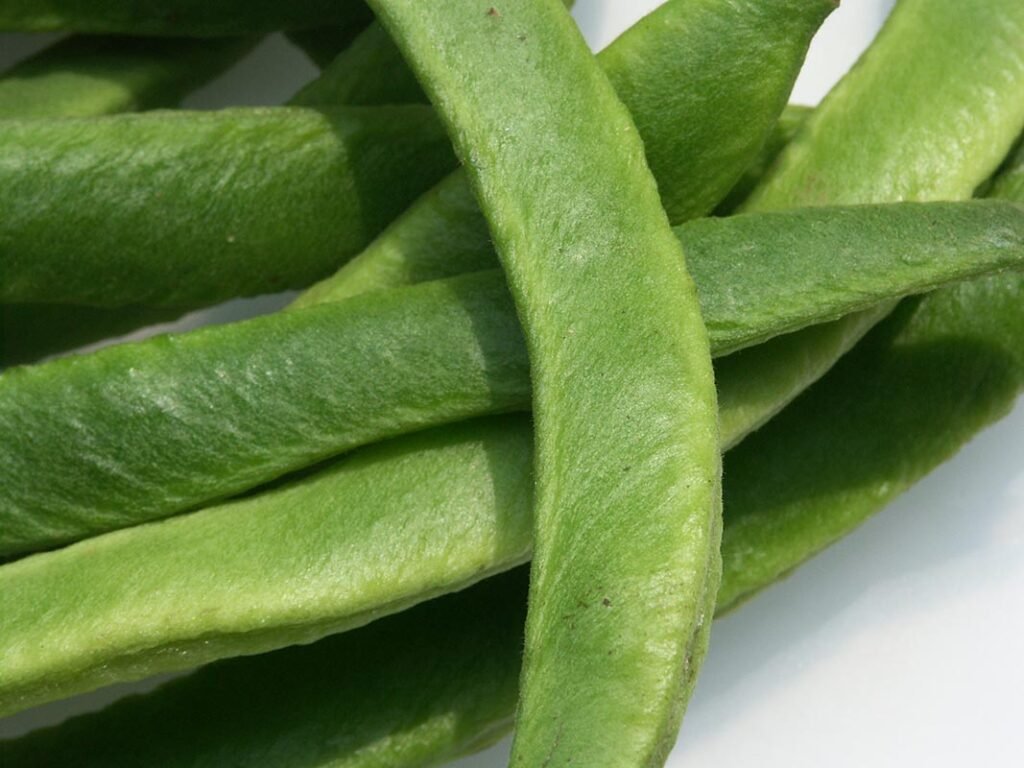
Fresh, young runner beans are a gem amongst the many wonderful vegetables available during the British summer. At their best they are at once tender, succulent and bursting with flavour. We love them simply piled onto a plate alongside meltingly soft roast lamb, roast potatoes and gravy, with a good glass of claret or perhaps a Coonawarra Cabernet Sauvignon to wash it all down, although the recipes we found in our favourite cook books show that they’re much more versatile than that.
HISTORY
Native to the cooler, high-altitude regions of Central America, runner beans have been known as a food crop for well over 2,000 years. They were brought to the British Isles in the seventeenth century by John Tradescant (gardener to King Charles I) and were grown as a decorative plant before being used as a food in Britain.
Today they are a very popular food in the UK, Italy and Mexico, and are grown and eaten in each of the five continents.
NUTRITION
Runner beans are a good source of vitamin C, folic acid and fibre.
BIOLOGY
Phaseolus coccineus has long been a favourite with gardeners due to its beautiful flowers and fast-growing nature. Most of the beans grown in the UK are of the scarlet runner variety.
TIPS
BUYING
Look for pert well-coloured pods that snap easily with a crunch to reveal a fresh and juicy inside. The smaller and younger the better; oversized or withered beans aren’t worth bothering with.
STORING
Runner beans will keep in the fridge for 2-3 days but, as with all legumes, the beans’ sugars start turning to starch after picking and they are best eaten as soon as possible.