
Our Top Three Chestnut Experiences:
- Nibbling still crunchy, pleasantly bitter chestnuts picked from the ground during a wander in the park.
- Following our nose to a stand on a London street (wet with rain and reflecting streetlamps like oil) and warming our fingers on a small paper bag of roast chestnuts.
- Making a special once-a-year winter pudding or cake that deliciously unites chestnuts and chocolate.
HISTORY
Chestnuts trees have grown across China and Japan since ancient times. The Greeks brought them to Europe from Asia Minor and later they spread across the continent with the Romans.
For many Europeans in the eighteenth and nineteenth centuries chestnuts were an important staple food and Italians used them to make polenta before the introduction of maize from the New World.
NUTRITION
Chestnuts are higher in carbohydrates and lower in fat and protein than other nuts. They contain fibre, potassium, iron, zinc and manganese.
BIOLOGY
Many varieties of chestnut tree exist, the common European chestnut being Castanea sativa. The trees take 20 years to fruit but remain productive for centuries.
TIPS
BUYING
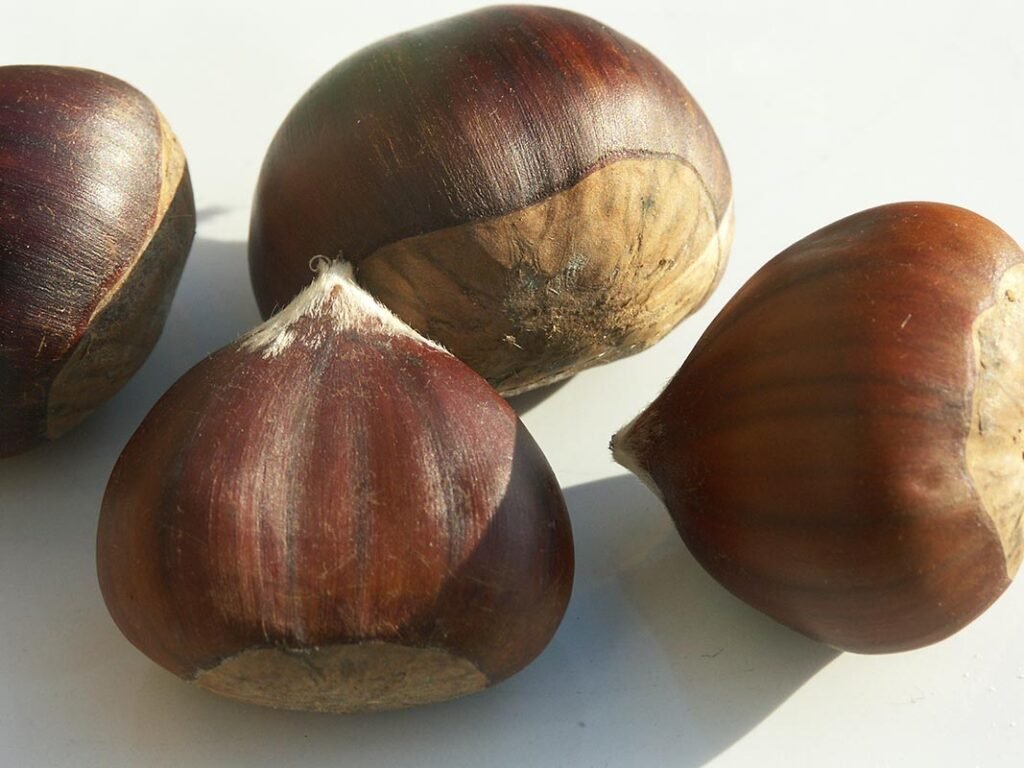
After picking, chestnuts slowly dry out and shrivel. Choose nuts that are heavy for their size with shiny, smooth shells. Give a squeeze to check that the nut inside is plump and full.
STORING
Freshly picked chestnuts start off quite crisp and become more tender and chewy over the following days or weeks before deteriorating to a dry and floury texture. Storage at a cool temperature (e.g. the fridge) slows the ageing process.