
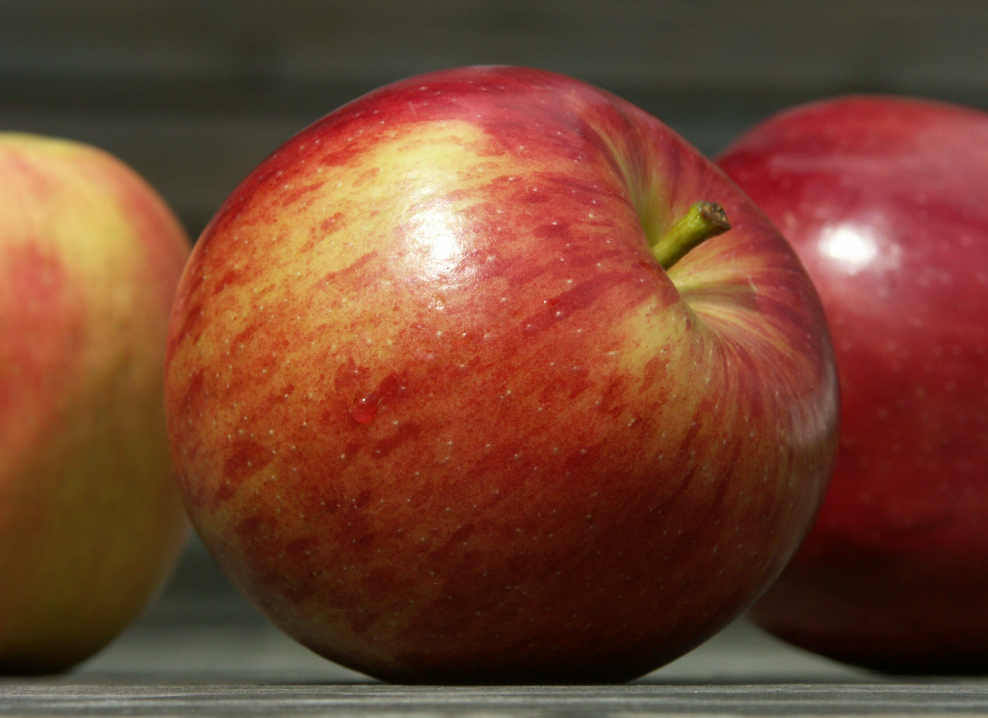
You may need to look beyond the supermarket shelves to find them, but there’s an exciting variety of apples from UK orchards – sharp apples, sweet apples, crunchy apples, softer-fleshed apples, red apples, yellow apples, green apples and everything in between. Many are perfect for enjoying on their own as a delicious, healthy, energy-boosting snack. And when used as an ingredient they can be transformed into some of THE great desserts (see recommended recipes), combining magically with flavours such as caramel, cinnamon or blackberries.
HISTORY
Although the origins of the apple are not clear, it is almost certainly one of the first fruits to have been cultivated. Apples were a favourite of the ancient Greeks and considered a luxury fruit by the Romans.
The apples familiar to us are a cultivated product, far removed from the small, sour crab apples that were the wild ancestors. Today apples are grown across the globe outside of tropical regions. China is by far the largest apple producing country, responsible for over 40% of the world’s output.
NUTRITION
Apples are rich in sugars (glucose, fructose, and sucrose). They contain useful amounts of fibre, vitamin C and potassium. Guercetin, a flavonoid that may help protect against heart disease, is also present.
BIOLOGY
The apple (Malus pumila) is a member of the Rosaceae family, which includes roses, strawberries, raspberries, apricots, plums and pears. There are thought to be over 7,000 varieties of apple.
STORING
Apples should be kept cool, in a plastic bag, in the fridge (or larder or garage) rather than the fruit bowl – the rate at which apples lose flavour and juiciness is proportional to the temperature at which they are stored. Apples are much less perishable than most fruit and many varieties will keep for a month or longer if bought fresh (those sold in shops may have been in storage for some time) and kept cool.
PREPARING
Give apples a thorough scrub and rinse – apple trees are often treated with an aggressive program of chemical sprays.
If peeling or slicing apples, drop the pieces in water acidulated with lemon juice to help prevent them oxidising (and so discolouring). Apple seeds contain amygdalin, a naturally occurring cyanide and sugar compound that degrades into hydrogen cyanide, so are best avoided.