
Many people are averse to beetroot having only experienced crinkle-cut slices steeped in overpowering vinegar. This is a shame because fresh beetroot has much to commend it in terms of flavour (sweet, slightly earthy), texture (smooth and velvety) and colour (dark red/purple, or an appealingly lurid pink when combined with cream or yoghurt).
These attributes make it a key ingredient in many fabulous salads. And if you haven’t tried fresh beetroot juice you may be pleasantly surprised at how subtle it is, particularly when offset with a sharper ingredient such as orange or apple and a bit of ginger.
HISTORY
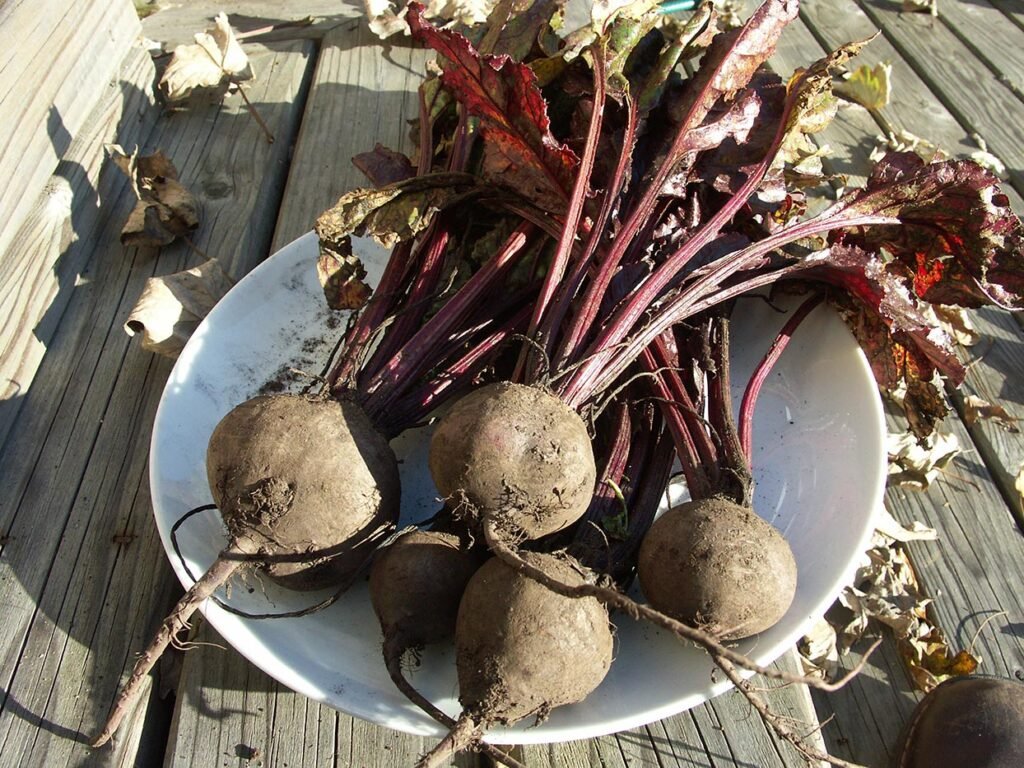
Beetroot evolved from wild seabeet which is a native of coastlines from India to Britain. Two thousand years ago, prior to being modified by cultivation techniques, beetroot had a carrot-shaped root and only the leaves were eaten (the small root was used for medicinal purposes by ancient Greeks and Romans). The familiar rounded root variety was developed around the sixteenth century and gained widespread popularity in Europe a couple of hundred years later.
Today beetroot is common throughout much of Europe, and is used extensively in Scandinavian, Eastern European and Russian cuisine.
NUTRITION
Beetroot is rich in iron, potassium and vitamin C. It is also a good source of carbohydrates, fibre and nitrates. Nitrates are converted in the body into nitric oxide, which relaxes blood vessels and so reduces blood pressure.
BIOLOGY
The beetroot plant, Beta vulgaris, has deep tap roots and can grow in a variety of soil conditions. Other members of the genus include chard, sugar beet, spinach and samphire. The red variety is dominant but golden and white beetroot is grown on a smaller scale.
TIPS
BUYING
Firmness is the key test of beetroot quality – they shouldn’t be at all spongey if you squeeze between finger and thumb. If you want to use the leaves they should be crisp, fresh looking and not too long or thick (if you don’t, it doesn’t matter too much if they’re a bit limp as they deteriorate much more quickly than the root).
STORING
Cut off the leaves and store in an unsealed plastic bag in the fridge. The leaves should be used within a day or two but the root will keep for a couple of weeks.
PREPARING
Tender baby roots can be grated raw in salads. Mature beetroot can be boiled (better for smaller, younger beetroot) or wrapped in foil and baked (better for larger, older roots).