
Quality sleep is one of the foundational pillars of physical and mental wellness. Many people overlook sleep habits, yet poor sleep can weaken immunity, reduce focus, disrupt mood, and raise long-term health risks. Efficient sleep does not mean sleeping as many hours as possible; it means getting restorative sleep that leaves you refreshed and energized each morning.

How Much Sleep Do You Need?
Sleep requirements change across age groups. The National Sleep Foundation provides widely accepted sleep duration guidelines for different populations:
- Adults (18–64 years): 7–9 hours per night
- Older adults (65+): 7–8 hours per night
- Teenagers: 8–10 hours per night
- School-age children: 9–12 hours per night
Reference: National Sleep Foundation sleep duration recommendations
Many adults try to survive on less than 6 hours of sleep long-term. While some people briefly adapt to sleep deprivation, research confirms chronic insufficient sleep harms metabolic health, memory and cardiovascular function.
Build a Consistent Sleep Schedule
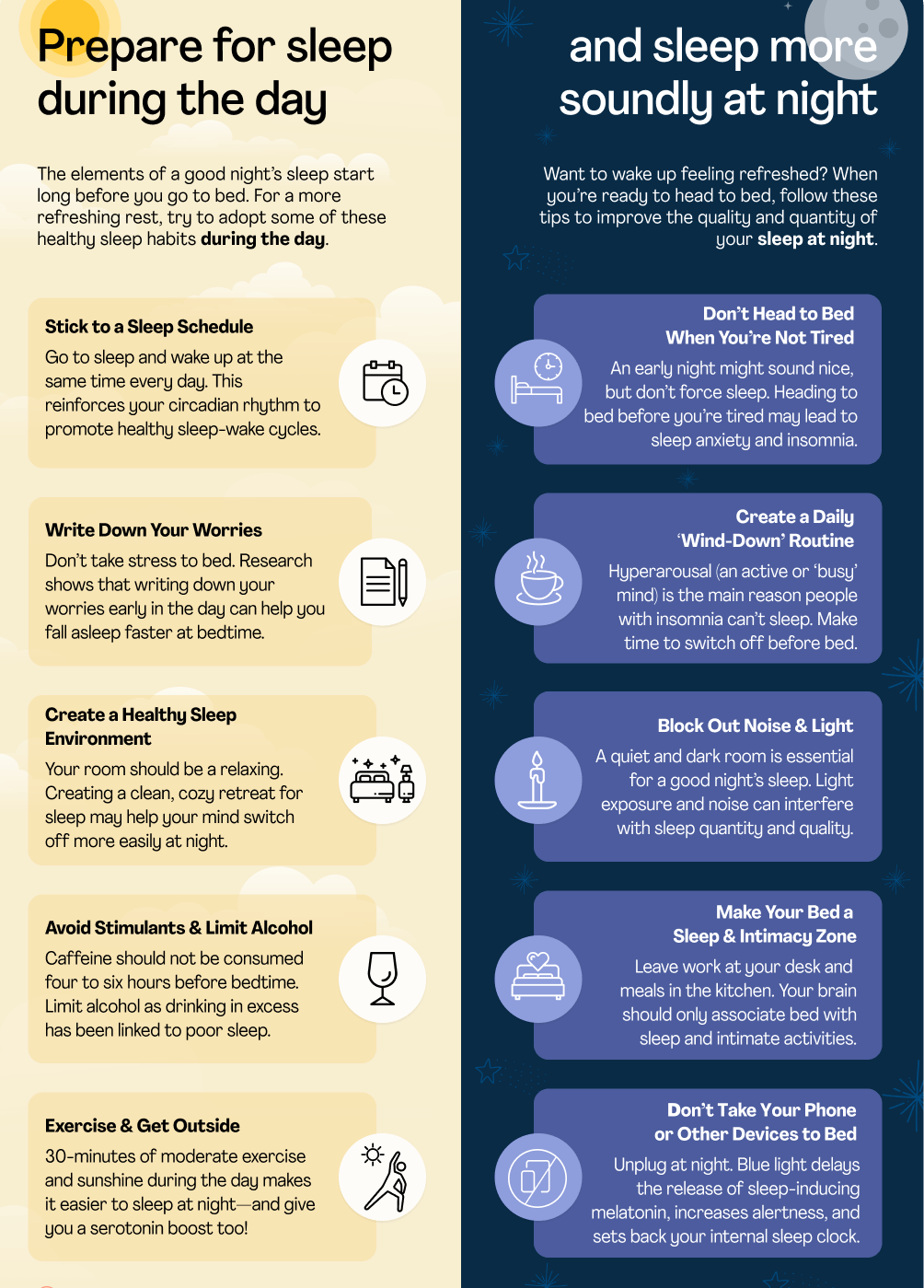
The single most impactful habit for better sleep is sticking to a fixed bedtime and wake-up time — even on weekends and holidays. Your body runs on a circadian rhythm, an internal 24-hour clock regulated by light exposure. Irregular sleep times confuse this rhythm, making it harder to fall asleep and wake naturally.
Practical tips:
- Wake up at the same time every day, no matter how late you slept.
- Get natural sunlight within 1 hour after waking up; daylight stabilizes circadian rhythm.
- Avoid long daytime naps. If you nap, limit it to 20–30 minutes before 3 PM. Long or late naps can rob nighttime sleep drive.
Optimize Your Bedroom Environment
Your bedroom should signal your brain: “this space is only for rest.” Keep the room cool, dark and quiet. Most people sleep best at room temperatures between 18–20°C (65–68°F).
Reduce blue light exposure 1–2 hours before bed. Phones, laptops and televisions emit blue light that suppresses melatonin, the hormone that triggers sleepiness. If you must use screens at night, turn on night-shift mode and lower screen brightness.
Evening Habits to Avoid
Certain daily choices directly hurt sleep quality:
- Caffeine: Coffee, energy drinks, black tea and dark chocolate contain caffeine, which can stay active in your body for up to 6 hours. Avoid caffeine after 2 PM.
- Heavy meals, spicy food and alcohol: Alcohol may make you drowsy faster, but it severely disrupts deep REM sleep later in the night.
- Intense exercise: Vigorous workouts close to bedtime can raise heart rate and body temperature, delaying sleep onset. Moderate daily movement is excellent for sleep, but finish hard exercise at least 3 hours before bed.
When Poor Sleep Is a Medical Concern
Occasional restless nights are normal. But if you struggle for 3 months or longer to fall asleep, stay asleep, or wake up exhausted despite spending enough time in bed, you may have chronic insomnia. Other common sleep disorders include sleep apnea and restless legs syndrome.
The Centers for Disease Control and Prevention (CDC) notes that untreated sleep disorders increase risk for hypertension, depression and diabetes.
Reference: CDC sleep health guidance
If you regularly snore loudly, wake up gasping for air, or feel exhausted every day, schedule an appointment with a healthcare provider or sleep specialist. Do not self-diagnose or take sleep aids without professional medical evaluation.
Simple Nighttime Routine Example
A relaxing pre-sleep routine tells your brain to slow down: dim lights, gentle stretching or reading physical books, warm low-volume shower, and avoid stressful work discussions. Keep your bedroom for sleep and rest only; do not work or attend meetings in bed.
Final Thoughts
Healthy efficient sleep is a daily habit, not something you can fix in one night. Small, consistent adjustments to your schedule, light exposure and evening routines often create big improvements over time. If sleep trouble persists, seek professional medical support.
Disclaimer This article is for informational purposes only and cannot replace personalized medical advice. If you have sleep disorders, chronic illness or other health concerns, please consult a licensed healthcare professional.
FAQ
Q: How many hours of sleep do adults need every night?
A: Adults between 18–64 years old need 7–9 hours of sleep each night, according to the National Sleep Foundation.
Q: Can alcohol help you sleep better?
A: No. Alcohol may help you fall asleep quickly, but it disrupts deep restorative REM sleep and causes fragmented sleep overnight.