
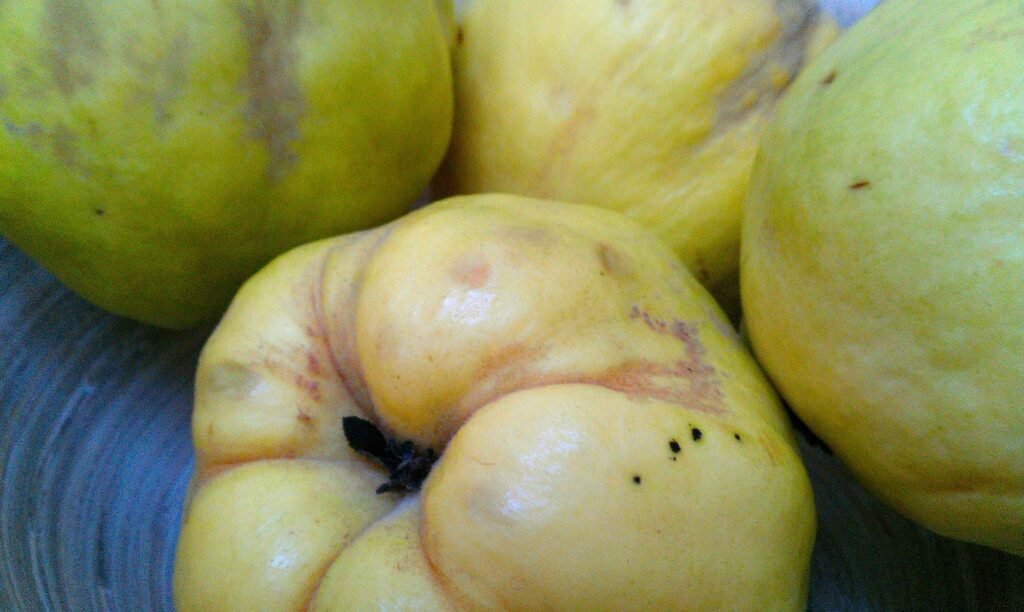
Resembling a lumpy pear, the ancient quince has become a bit of a forgotten fruit in recent times. This is perhaps because beneath the quince’s distinctive golden yellow skin and alluring fragrance, its flesh is astringent and sour when raw. However, given some patient and gentle cooking, quince can be a delicious and distinctive addition to many dishes, both sweet and savoury.
It is particularly popular in jams and jellies due to its high levels of pectin and it is the main ingredient in the well known Spanish membrillo, a quince paste which is commonly served alongside Manchego cheese.
HISTORY
Born in Caucasus where it still grows wild today, the quince made its journey west across to the Mediterranean regions of Europe around 600BC. In ancient Greece, the quince was heralded as a fruit of love, marriage and fertility and it was often given as a wedding gift to the bride to sweeten her breath.
The quince made its way to England in 1275 when Edward I ordered that quince trees be planted at the Tower of London. Thereafter, it was a common ingredient in jams, jellies, crumbles and pies and was often served alongside rich cuts of meat.
NUTRITION
The quince is rich in vitamin A, vitamin C, fibre and iron.
TIPS
BUYING
Look out for firm fruit with a golden yellow skin. It is unlikely that you will find quince in the supermarket; instead, seek them out at your local farmers market from around the end of October when the quince season begins.
STORING
Quince store very well if kept in cool and dry conditions and can keep for a month or two. Wrap quince and keep refrigerated until you are ready to use them. They have a strong (but pleasing) aroma, so it is best to store them away from other fruits.
PREPARING
Fresh off the tree, quince tend to be covered in a light, downy fur which should be rubbed off under a tap before the fruit is prepared. It is best to remove the tough skin of the quince which can be tricky to do with a knife, but easier with a vegetable peeler. The flesh of the fruit oxidises rapidly when exposed to the air, so squeeze half a lemon or lime over the flesh of the quince to prevent it from going brown.
Raw quince is unpleasantly acidic – cooking softens and sweetens the flesh whilst turning it a rather fetching golden pink colour.