It is happening every day all around us, in the air we breathe, the water we drink, and the food we eat. These tiny plastic particles are making their way into our bodies. Experts estimate that we ingest around 5 grams of microplastics every week, which is around the size of a credit card. Once ingested they can migrate from our gut to the tissues of our liver, kidney, and even brain, changing metabolic pathways and inflammatory responses in the affected tissues.
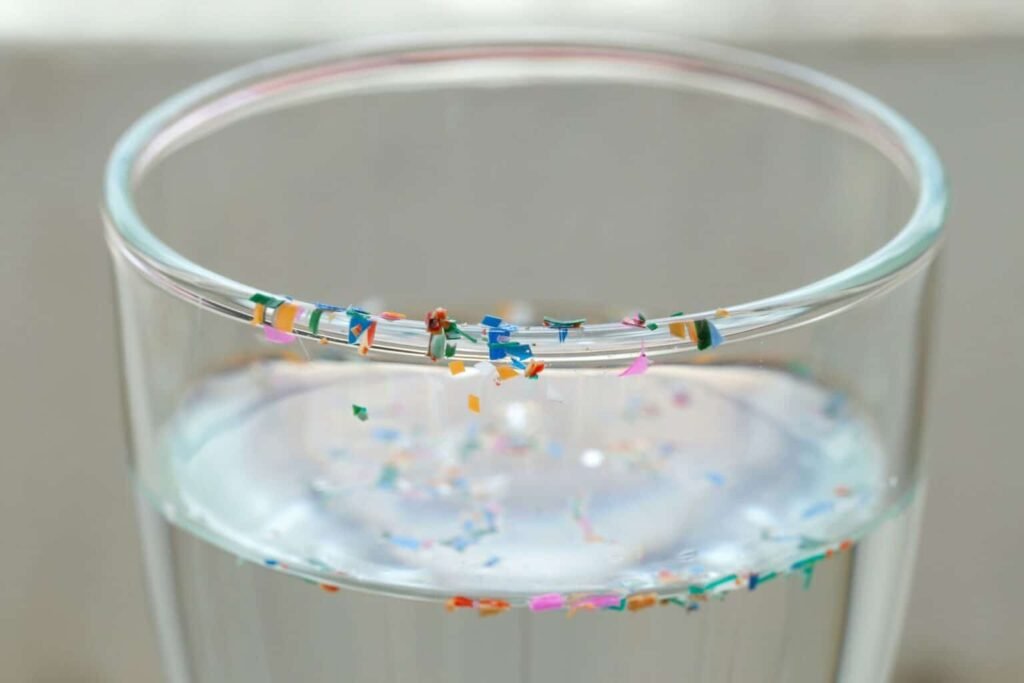
Some research is even finding significant concentrations of microplastics in the testicular tissue of humans and animals, adding to the growing concern about their effects on human health and our reproductive systems.
Now, new research from the University has found more alarming effects leading to cancer and infertility. Here’s what the researchers had to say:
Suspect microplastics may be causing respiratory and other illnesses
Tires and degrading garbage shed tiny pieces of plastic into the air, creating a form of air pollution that UC San Francisco researchers suspect may be causing respiratory and other illnesses.
A review of some 3,000 studies implicates these particles in a variety of serious health problems. These include male and female infertility, colon cancer and poor lung function. The particles also may contribute to chronic pulmonary inflammation, which can increase the risk of lung cancer.
“These microplastics are basically particulate matter air pollution, and we know this type of air pollution is harmful,” said Tracey J. Woodruff, PhD, MPH, a professor of obstetrics, gynecology and reproductive sciences at UCSF.
Woodruff directs the Program on Reproductive Health & the Environment (PRHE) and is the senior author of the study, which appears Dec. 18 in the journal Environmental Science & Technology.
Microplastics: small particles, big problem
Microplastics are less than 5 millimeters — smaller than a grain of rice — and they are ubiquitous in the environment. Each year, companies around the world produce nearly 460 million metric tons of plastic. That is projected to reach 1.1 billion by 2050.
A major source of plastic in the air is driving. Friction wears down tires along with the road surface, sending plastic fragments into the air. Other sources include plastic pellets, personal care products, paints, tires, synthetic textiles, and macroplastics.
The paper is the first systematic review of microplastics using gold-standard methods approved by the National Academy of Sciences.
Most of the studies in the review were based on animals. But the researchers said the conclusions likely also apply to humans since they share many of the same exposures.
The study expands on a report the researchers worked on last year with the California State Policy Evidence Consortium (CalSPEC). The Consortium includes experts across the UC system and provides evidence for policymakers in the California State Legislature.
“We urge regulatory agencies and policy leaders to consider the growing evidence of health harms from microplastics, including colon and lung cancer,” said Nicholas Chartres, PhD.
Chartres, the study’s first author, led the science and policy team at PRHE and is now at the University of Sydney. “We hope state leaders will take immediate action to prevent further exposures.”