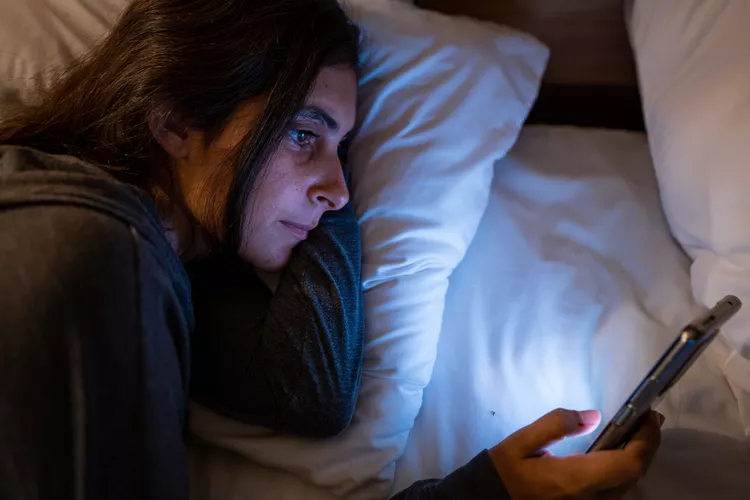
Anxiety at night can cause symptoms like nocturnal panic attacks and a racing heartbeat. These symptoms can disrupt your sleep and worsen anxiety.
What Causes Anxiety at Night?
Stress and anxiety can make your mind more active than usual. These feelings trigger a heightened mental and emotional state called hyperarousal.
Your fight-or-flight response—or how your body automatically reacts to stressful events—can be thrown off balance.
You may also have anxiety at night due to the following:
- Daytime stress: Being stressed during the day can disrupt sleep at night.
- Mental health conditions: Generalized anxiety disorder (GAD) and post-traumatic stress disorder (PTSD) can cause or worsen sleep difficulties.
- Sleep deprivation: Noradrenaline is a brain chemical and hormone that causes alertness. Losing sleep at night can cause an unusual increase in noradrenaline levels.5 You might suddenly wake up with anxiety at night and find it hard to fall back asleep.
Symptoms To Watch Out For
Anxiety symptoms may vary, depending on what’s causing the anxiety. General anxiety symptoms can include:6
- Difficulty concentrating or controlling feelings of worry
- Easy fatigue
- Feelings of doom
- Irrational worries
- Irritability
- Restlessness or feeling wound up and on edge
- Sleep problems
- Tense muscles
- Trembling or shaking
Symptoms at Night
It’s also possible to have panic attacks that happen at night, or nocturnal panic attacks, which jolt you awake.7
Typical signs of a panic attack can include:
- Chills or hot flashes
- Dizziness, feeling faint
- Elevated, racing heartbeat
- Feelings of fear and loss of control
- Intrusive thoughts, or racing, unwanted worries
- Nausea or abdominal (belly) pain
- Numb or tingling sensations in the body
- Shortness of breath, chest pain, or difficulty breathing
- Sweating
Waking up with stress and anxiety makes it harder to fall back asleep. This causes more anxiety, which creates a vicous cycle.
Anxiety, PTSD, or sleep disorders can disrupt rapid-eye movement (REM) sleep. This helps process emotions and decrease emotional responses to stress. You may spend less time recovering from stress when you lose out on REM sleep.
https://www.opinionstage.com/api/v2/widgets/15140e58-3b9c-4998-938c-c0803415744c/iframeMedically reviewed by Kira Graves, PhD
How Can You Calm Anxiety At Night?
Some techniques can help you reset and go back to sleep, such as:
- Change your environment: Make your sleeping area as comfortable as possible. Your environment should be cool, dark, and quiet, with a supportive mattress and pillows.
- Do not clock-watch: Knowing what time it is may only add to your worries if you wake up with anxiety.11Dawson SC, Krakow B, Haynes PL, Rojo-Wissar DM, McIver ND, Ulibarri VA. Use of sleep aids in insomnia: The role of time monitoring behavior. Prim Care Companion CNS Disord. 2023;25(3):47122. doi:10.4088/PCC.22m03344
- Establish a screen-free bed: Avoid checking your phone in bed, do not watch TV, and keep your laptop off.
- Get up and do something relaxing: Go into another room for a moment if you cannot fall back asleep after 15 minutes. Sit in a comfortable chair and read or do breathing exercises, then try going to bed again.
- Lower certain types of lighting: Decrease white or blue lights. Dim yellow and orange or red lights will not interrupt your sleep as much.
- Write down future tasks: Writing down what you have to do may help you sleep if something is on your mind, keeping you from falling asleep.
Steps To Prevent Nighttime Anxiety
Easing anxiety can improve your sleep. Several strategies can help manage anxiety and stress:
- Anxiety redirection: Being more engaged in your community, such as volunteering or simply lending your neighbor a hand, can take your mind off stress and anxiety.
- Exercise: Physical activity in the mornings or afternoons can ease anxiety symptoms.
- Meditation: Deep breathing and progressive muscle relaxation (PMR)—when you tense one area of your body at a time, then relax them one at a time—can help you relax.
- Professional assistance: It may be worth talking to a psychiatrist or therapist about your anxiety, for support and treatment.
- Relaxing activities: Unwind from the day and get ready for sleep with a bedtime routine of relaxing activities, like listening to music, reading, journaling, or taking a bath.
- Task management: Break down extra stressful tasks into smaller, more manageable steps. It may be helpful to write them down.