
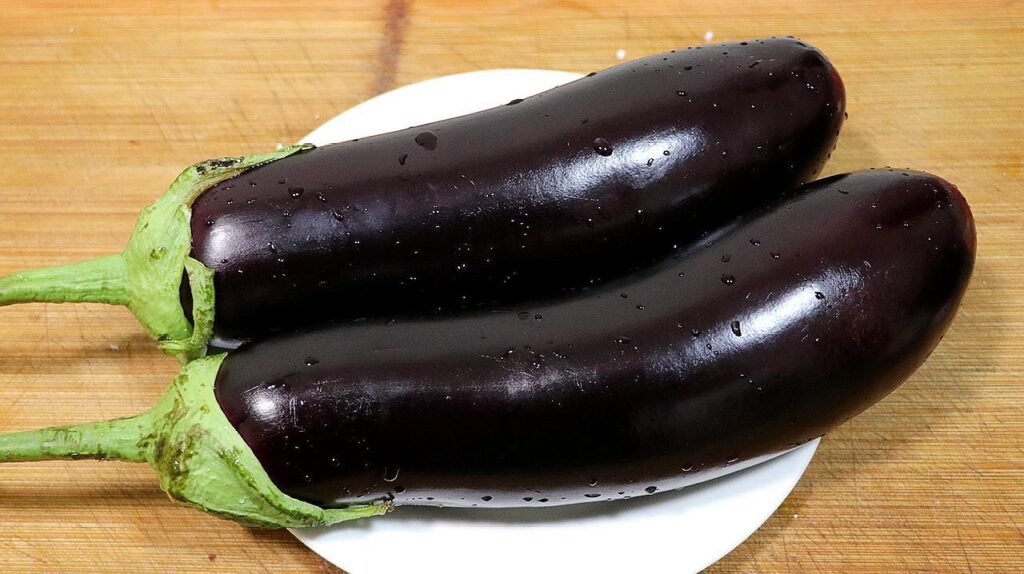
Although often associated with warmer, more exotic lands, the striking looking aubergine is widely cultivated in Britain. Its subtle and distinctive combination of textures and flavours – smooth, fleshy, creamy, smoky – make it a versatile and beguiling component of many great dishes.
HISTORY
The aubergine is thought to be of Indian origin and records show that it was being cultivated in China in the fifth century. From around the fifteenth century it became increasingly popular in Mediterranean Europe and has long been established in classic dishes such as moussaka (from Greece) and ratatouille (southern France). Influential cookery writer Elizabeth David played a significant role in bringing the aubergine to the attention of the British in the mid-twentieth century.
NUTRITION
Aubergines are a good source of fibre and folic acid. The colour of the skin is a result of the presence of anthocyanins – compounds with antioxidant properties.
BIOLOGY
Aubergine (Solanum melongena) is botanically not a vegetable but a berry.
TIPS
BUYING
Choose aubergines that feel heavy with smooth, taut, unblemished skin and fresh-looking unwithered green stalks.
STORING
Aubergines are easily damaged; handle with care. They keep in the fridge for a few days.
PREPARING
In the past it was normal to salt aubergines to remove bitterness and moisture. Nowadays aubergines are rarely too bitter and this step can be safely omitted.
Slices of aubergine can be griddled, sauteed