
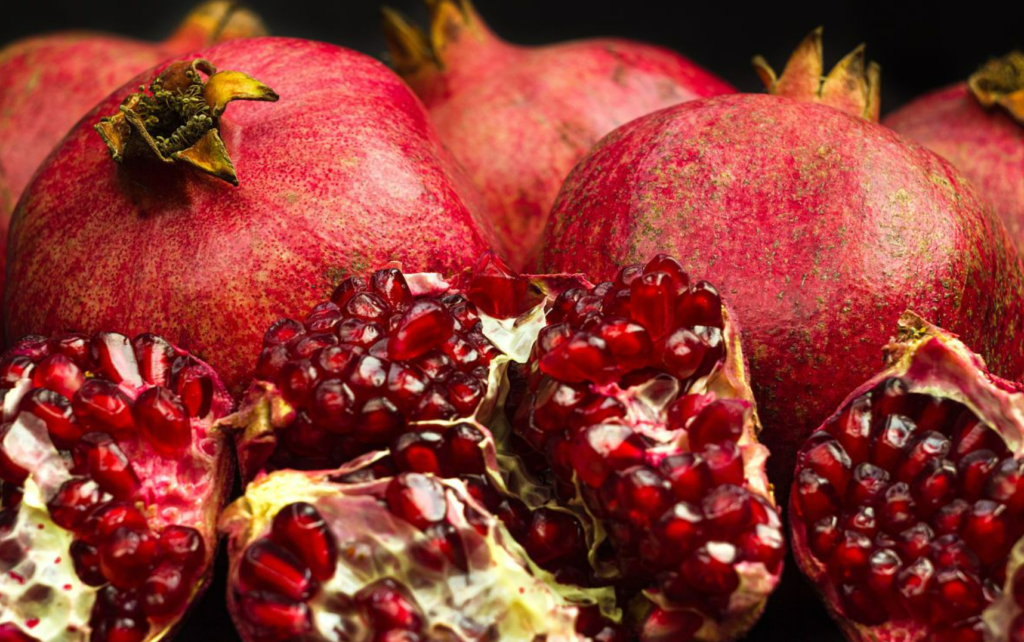
With their glossy, leathery skin containing hundreds of seeds that sparkle in bright pinkish-red pulp and juice, there’s something very festive about pomegranates. Their attractive appearance and fragrant sweet-sharp juice adds excitement to both sweet and savoury dishes.
HISTORY
The pomegranate is native to Iran where it still grows wild today and from where it spread to India, China and Europe at least two thousand years ago. The pomegranate plays a key part in the tale of Demeter and Persephone, a Greek myth explaining the origin of the seasons.
Spanish sailors took the fruit to America as its tough skin and durability made it a fruit well suited to long sea voyages.
Pomegranates have long featured in traditional dishes throughout the Middle East and the Caucasus. They are now grown in the Mediterranean, tropical Africa, India and South East Asia. Largely ignored by the English-speaking world until relatively recently, they have become a much less rare sight in the UK in the last decade.
NUTRITION
Pomegranates have very high antioxidant properties and are rich in potassium, vitamin C, niacin and fibre.
BIOLOGY
Punica granatum is a small long-lived tree whose fruit contain seeds (precisely 840 each, apparently) that are distributed by birds feeding on the pomegranates.
TIPS
BUYING
Pick fruit that are weighty for their size (indicating a high liquid content) with taut, glossy, unbroken skin.
STORING
Stored in a fridge or other cool, dry place, pomegranates keep for many weeks if not months. How long yours keep will depend on how long they were stored before purchase, but pomegranates bought in good condition should be fine for a month.
PREPARING
To extract the pulpy seeds, cut in half and spoon them out. Discard the bitter white flesh. If it’s the juice you’re after, roll the pomegranate on a hard surface with the palm of your hand before cutting in half. Squeeze the contents into a sieve and press with a wooden spoon.