
OK, bananas are clearly not by any stretch of the imagination a local seasonal food here (yet, although my next door neighbour’s garden features a fine banana tree which fruits regularly). But we feature them because they’re a delicious, nutritious, inexpensive and versatile way of filling the sweet treat gap between UK orchard fruit and summer berries.
Try adding a comforting baked banana pudding or bread recipe to your late winter / early spring cookery repertoire.
HISTORY
Evidence suggests that bananas have been eaten in India for several thousand years. They were being grown in China in AD200 and by the 15th century were cultivated across Africa. Banana imports only began reaching a wider audience in the northern hemisphere in the last hundred years.
In the 1950’s, the industrialisation of beet sugar production in Europe struck a blow to cane sugar exporters from the Windwards Islands and Caribbean. Banana growers spotted an opportunity and stepped in to meet a growing market that couldn’t be served from European crops.
NUTRITION
Bananas supply a significant amount of potassium and vitamin B6 and moderate levels of folic acid and vitamins A and C. Their sugars form a rich energy source that is released over a relatively long period of time, hence their use by many sportsmen and women as a natural performance-enhancing dietary supplement.
BIOLOGY
The banana plant looks like a tree but is, botanically speaking, a fast-growing perennial herb. Each year it grows a completely new trunk-like shoot that dies back to its roots again after the plant has fruited.
TIPS
BUYING
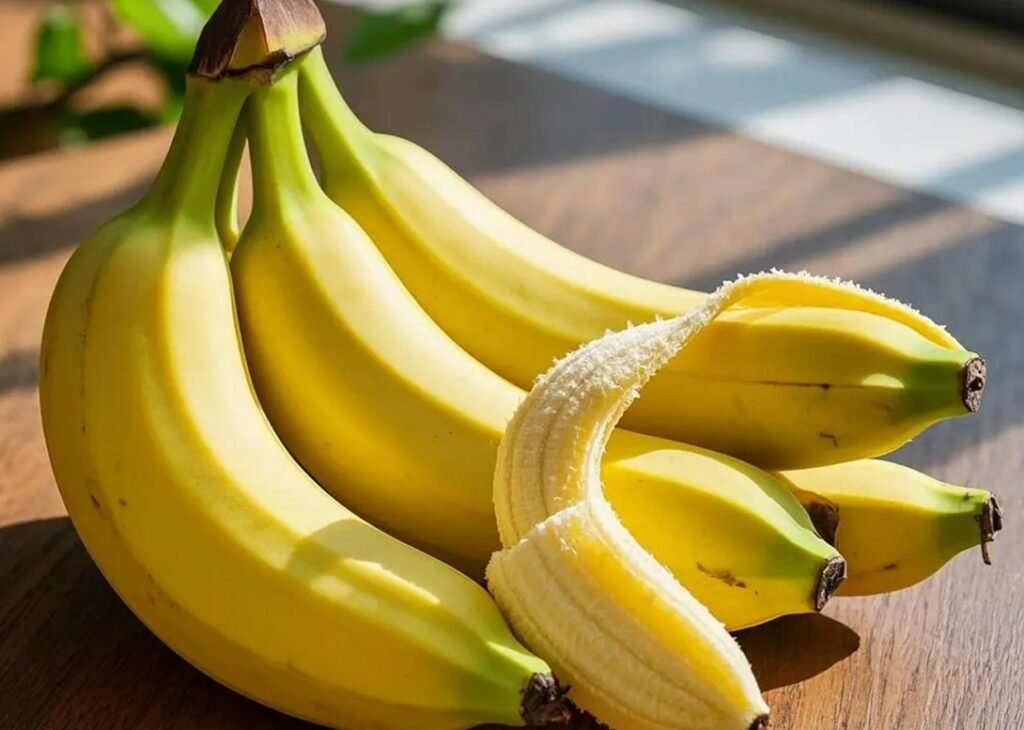
The taste and texture of a banana develops as it ripens. Fruit that are yellow with just the hint of a freckling of brown will be at their most flavoursome; eat your banana earlier than this if you prefer a firmer texture (often better for cooking). Soft or strongly smelling fruit are overripe.
STORING
Bananas that require further ripening should be kept at room temperature, but away from heat or direct sun. Ripe bananas can be refrigerated, which arrests the ripening process, for a few days – allow them to reach room temperature before eating. Or freeze surplus bananas for use in smoothies.
PREPARING
Banana slices can be prevented from discolouring quite so quickly by dipping them in an acidic citrus juice such as orange, lemon or lime.