
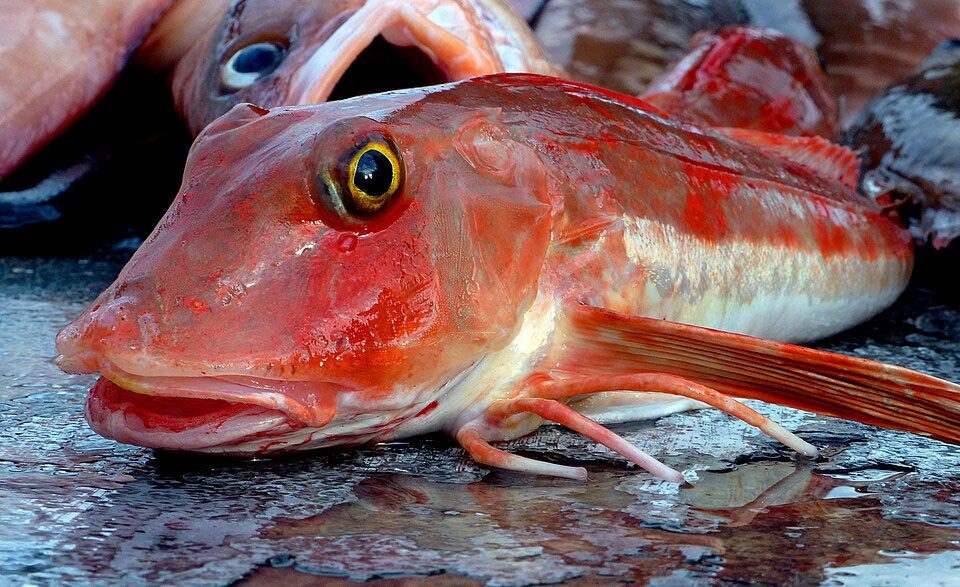
Gurnard is an odd (or, to be less charitable, ugly) looking fish: slightly bulging eyes atop a pointed snout wearing a sulky pout. It is perhaps these aesthetic qualities, combined with a skeleton not designed for easy filleting, that accounts for it’s relative culinary obscurity.
However Gurnard is well-endowed with tasty meaty flesh – think haddock crossed with monkfish – and is a very versatile fish for cooking with. The last few years have seen some signs of increased interest in the fish thanks, in part, to endorsements by high-profile chefs. How long before this cheap, sustainable species is over-priced and over-fished?
HISTORY
For much of the last few decades, gurnard catches have routinely been either discarded by fisherman or used for baiting lobster pots. Some fish found their way, anonymously, into fish stocks and stews.
The increasing awareness of seafood sustainability issues, partly fuelled by Hugh Fearnley-Whittingstall’s ‘Fish Fight’ campaign in the UK, seems to be helping to make gurnard a less rare sight on fishmongers’ slabs and restaurant menus in the last few years.
NUTRITION
Gurnard is a good source of protein and is low in fat.
TIPS
BUYING
Not generally stocked by supermarkets, you’ll probably need to find a decent fishmonger to track down a gurnard. As descaling and filleting are a bit trickier than your average fish you may want to ask your fishmonger to prepare the fish to your requirements.
Red gurnard are probably the most frequently encountered species but they’re not noteably superior in eating qualities to the grey or tub gurnard.
Use the Good Fish Guide to make better informed choices when buying seafood.
STORING
As with all fish gurnard is best cooked and eaten the day you buy it, but a fresh specimen will be fine in the fridge for a couple of days. They also freeze well.