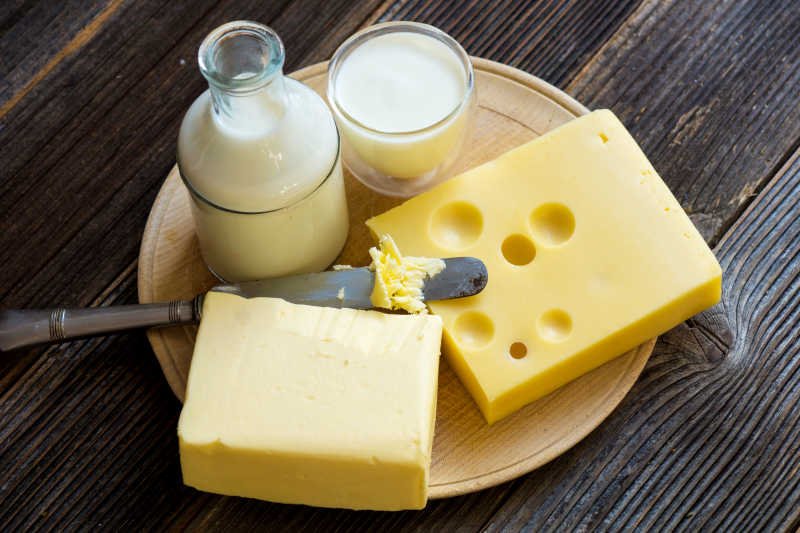
any pasteurised milk, butter, yoghurt, cream and ice cream (including cows’, sheep’s and goats’ milk)
pasteurised or unpasteurised hard cheeses, such as cheddar, gruyère and parmesan
pasteurised semi-hard cheeses, such as edam
pasteurised soft cheeses, such as cottage cheese, cream cheese, processed cheese spreads, mozzarella, feta, paneer, ricotta, mascarpone, halloumi, burrata and goats’ cheese that does not have a white coating (rind) on the outside
any cheese that’s been cooked until steaming hot, including soft or blue cheese
Most dairy products, like milk, cheese and butter you buy in supermarkets are pasteurised. You can check the packaging to make sure.
Foods to be careful with
any foods made from unpasteurised milk, such as soft ripened goats’ cheese with a white coating on the outside – these must be thoroughly cooked
pasteurised or unpasteurised mould-ripened soft cheeses with a white coating on the outside, such as brie, camembert and chèvre – these must be thoroughly cooked
pasteurised or unpasteurised soft blue-veined cheeses, such as Danish blue, gorgonzola and roquefort – these must be thoroughly cooked
pre-packaged sandwiches and salads containing cheese and other dairy products – keep them chilled and eat them before the use-by date
Foods to avoid
unpasteurised milk, cream, yoghurt, butter and ice cream (including cows’, sheep’s and goats’ milk)
Why some cheese and dairy foods are not safe to eat
Unpasteurised or soft ripened dairy foods may contain listeria bacteria, which can cause listeriosis.
Pre-packaged sandwiches and salads can also contain listeria bacteria.
Listeriosis can cause miscarriage or stillbirth, or make your newborn baby very unwell.
Healthbys shares trustworthy wellness guidance to help you build sustainable healthy habits. Our articles are for information only and cannot replace professional medical advice.