
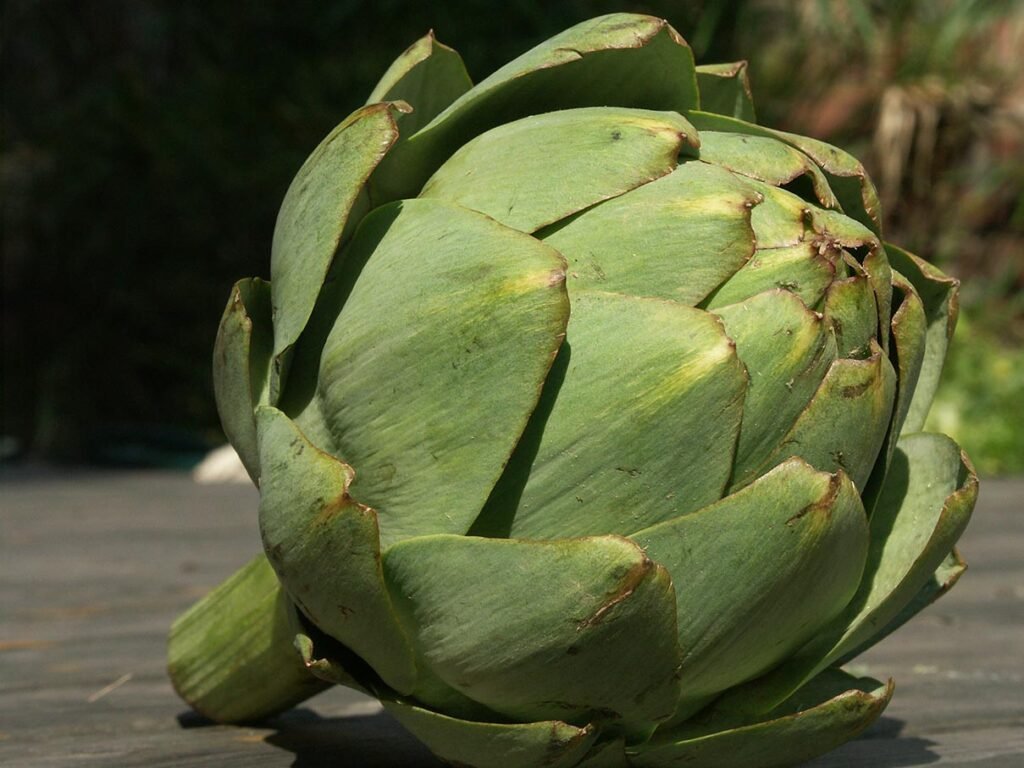
The artichoke isn’t a food to choose when you need a fast food fix. It’s a slow food to linger over. Patience shown in preparation and eating is ultimately rewarded by the subtly flavoured leaves and the mouthwatering artichoke heart. You can serve artichoke as a dish in its own right, with a bowl of vinaigrette or lemon butter for dipping. We prefer to use it as an ingredient, adding something special to a salad, pasta sauce or pizza topping.
Artichokes aren’t grown extensively in this country, so if you can’t find any UK-grown examples go for fresh-looking French imports.
HISTORY
The artichoke developed from the cardoon and is thought to have originated in the Mediterranean region. There are references to it being grown in Italy and Sicily from around 300 B.C. In the ninth century it was being cultivated by the Moors in southern Spain. It is thought to have been introduced to England in the sixteenth century, although it has never made much of an impact on British cuisine.
Today the artichoke is prized in French and Italian cookery, and recipes for stuffed artichoke have long been popular in Arabic cuisine.
NUTRITION
The artichoke contains significant levels of vitamin C, folic acid, potassium and fibre.
TIPS
BUYING
Pick artichokes with well-coloured, undamaged, tightly-closed leaves. Fresh artichokes will be heavy for their size due to their moisture content. Smaller artichokes have more tender leaves (baby artichokes may have leaves that are entirely edible); larger ones have bigger hearts.
STORING
Sprinkle with a little water and store in a plastic bag in the fridge. Use as soon as possible for maximum flavour.
PREPARING
Remove and discard the toughest of the outer leaves (bracts). Snip off any sharp leaf tips. Snap the stalk off at the base and remove the tough fibres running into the base where possible. Gently prise open the leaves to gain access to the core of the flower. Pull out the central cone of thinner leaves to reveal the inedible fibrous ‘choke’ (this may not be present in smaller baby artichokes). Carefully scrape this out with a teaspoon, leaving the prized heart in place. Rinse out the artichoke with acidulated water (e.g. water with a good squeeze of lemon juice added) to prevent discolouration.