
In fact, You don’t need to spend lots of money, or go on a special diet – you just need a balance of the right types of food. These include:
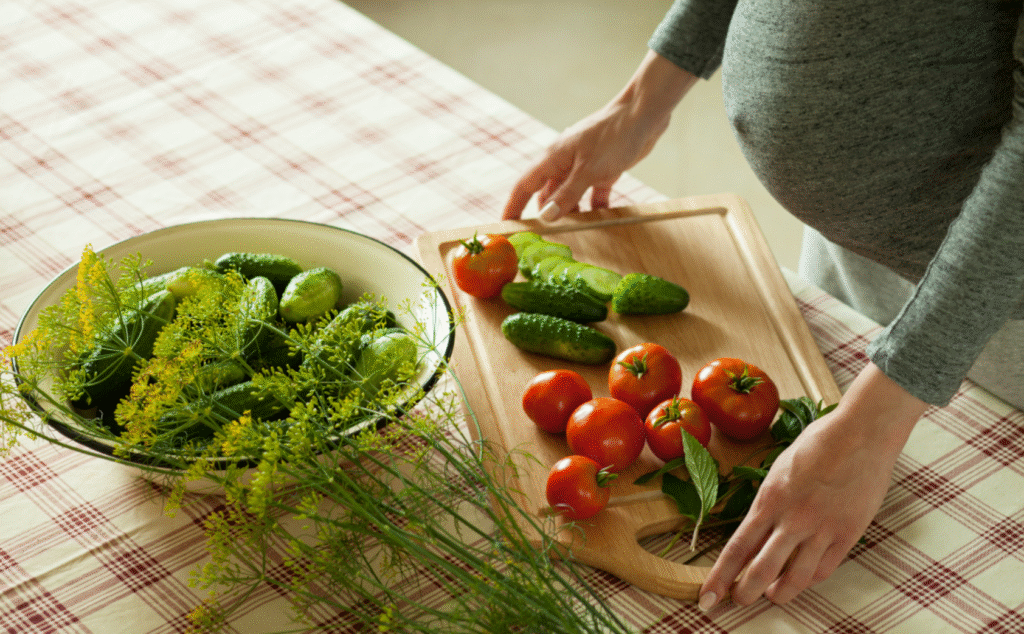
- Fruit and vegetables
Aim to eat at least 5 portions of fruit and veg a day. Fresh, frozen, canned, dried or juiced can be part of your daily allowance – try to avoid anything with added salt or sugar.
- Starchy foods (carbohydrates)
These types of food are an important source of energy, certain vitamins and fibre. They include:
- bread
- potatoes
- breakfast cereals
- rice
- pasta
- noodles
Try to choose wholemeal instead of refined, starchy (white) foods.
- Protein
Protein provides the building blocks for your baby to grow. Foods in this group include:
- meat (avoid liver)
- fish
- poultry
- eggs
- beans
- pulses
- nuts
Fish
Try to eat 2 portions of fish a week (a portion is around 140g). 1 of these should be oily fish, such as salmon, sardines, trout, mackerel or herring.
Oily fish is good for your heart and helps your baby’s nervous system develop.
Try not to have more than 2 portions of oily fish each week though. This is because oily fish can contain pollutants (toxins).
There are some types of fish you should avoid (raw shellfish, shark, swordfish and marlin) if you’re pregnant or trying to conceive.
Eggs
Hen eggs produced under the British Lion Code of Practice (stamped with the red lion) or produced under the Laid in Britain scheme, are considered very low risk for salmonella and safe to eat raw or partially cooked.
Any hen eggs that are not British Lion eggs or produced under the Laid in Britain scheme, should be well cooked. Other types of eggs, including duck, quail and goose eggs, should also be well cooked.
If you have a severely weakened immune system or are on a medically supervised diet prescribed by health professionals, you should cook all eggs thoroughly.
- Dairy
Dairy includes:
- milk
- cheese
- yoghurt
These products contain calcium and other essential nutrients. When possible, choose low-fat varieties, such as semi-skimmed, 1% fat or skimmed milk, low-fat yoghurt and reduced-fat hard cheese.
If you prefer dairy alternatives, such as soya drinks and yoghurts, opt for unsweetened, calcium-fortified versions.